



2030%
the profit lift identified in one review of a healthy, profitable business
01
AI transformation
We fast-track founder-led businesses to stronger profitability: refining how the business runs, then installing AI where it genuinely pays off. A leaner cost base, a stronger commercial engine, and a business that performs without you in every room.
experience built across




























02
The record
the profit lift identified in one review of a healthy, profitable business
an eight-person team became one AI-augmented operator, in our own company
the property-appraisal time we identified we could cut in one review, at a national real-estate franchise
most engagements return their cost inside the first year
staff adoption in the firm-wide AI rollout our implementation lead ran at a top-50 accounting firm
saved and tracked in that same rollout, measured, not estimated
We didn't read about this. We built it. Read the essay: I replaced an eight-person team with AI
03
The real problem
Your processes grew organically, one workaround at a time. Nobody designed them, and nobody's looking at the whole company at once. Bolt AI onto that and you just do the wrong thing faster. So we start with the boring, valuable work: understanding how your business actually runs, then applying AI only where it adds meaningful value.
04
The sequence that matters
Same origin, same target. The grey routes are where most businesses sit: the process as it grew, with or without AI bolted on. The terracotta steps are the sequence: smooth the route, add the speed, then refine. The order is the whole point.
01 TODAY
5TH
02 THE SHORTCUT MOST TAKE
4TH
The work starts here
03 STEP 01 · OPTIMISE
3RD
04 STEP 02 · ADD AI
2ND
05 STEP 03 · REFINE
1ST
AI makes a bad process faster. It doesn't make it right.
Refined arrives closest to perfect. Even optimisation alone, run slow, still beats AI bolted onto the rough route.
05
The review
One holistic review of your business, each area scored inside the culture that shapes it, the hidden risks flagged, and turned into a single ranked plan.
People
Is the team engaged, how the business really runs, and who can you not afford to lose?
Operational
How the work gets done, and where time and cost leak.
Commercial
How you win and keep customers, and where growth is missed.
Financial
Margins, cash, and where the money really goes.
Tech & Data
Your systems and data, and where AI actually helps.


Lower cost
More revenue

Less risk
Time back
06
What it delivers
01
Lower cost
02
More revenue
03
Less risk
04
Time back
Built to pay for itself. Most engagements return their cost inside the first 12 months, and we tell you honestly where AI helps and where it doesn't.
07
How it works
01
Map
A fast first look at how your business runs: where the time, cost and opportunity concentrate, and whether there's enough value to justify going deeper. You leave with a ranked shortlist, whether or not you continue.

08
Why Echelon One
Two years applying this in our own companies before bringing it to anyone else: scaling one business to 150 people across eight companies, and replacing an eight-person team with AI. The methodology was forged running real businesses under real pressure, not written on a slide. The human disciplines come first, strategy, process, people, and AI goes on top, only where it adds meaningful value.
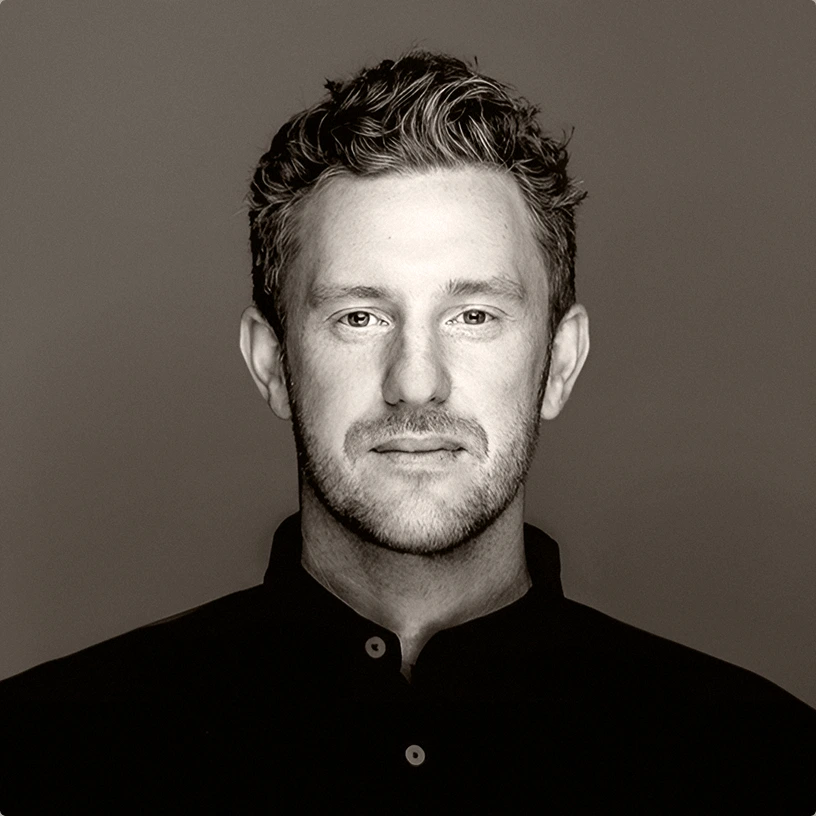
Luke Lombe
Founder & CEO
Luke has spent two decades doing one thing in very different rooms: making businesses run better. He was Director of Optimization at DMG Entertainment, one of China's largest media companies and the studio behind Iron Man 3; delivered national-scale projects from the $83M Australian pavilion at the Shanghai Expo to scoping a $160M build in Times Square; and scaled a venture studio to 150 people across eight companies. Echelon One is that same discipline, optimization, now with AI as the lever. He built the method in his own companies first, then brought it to clients.
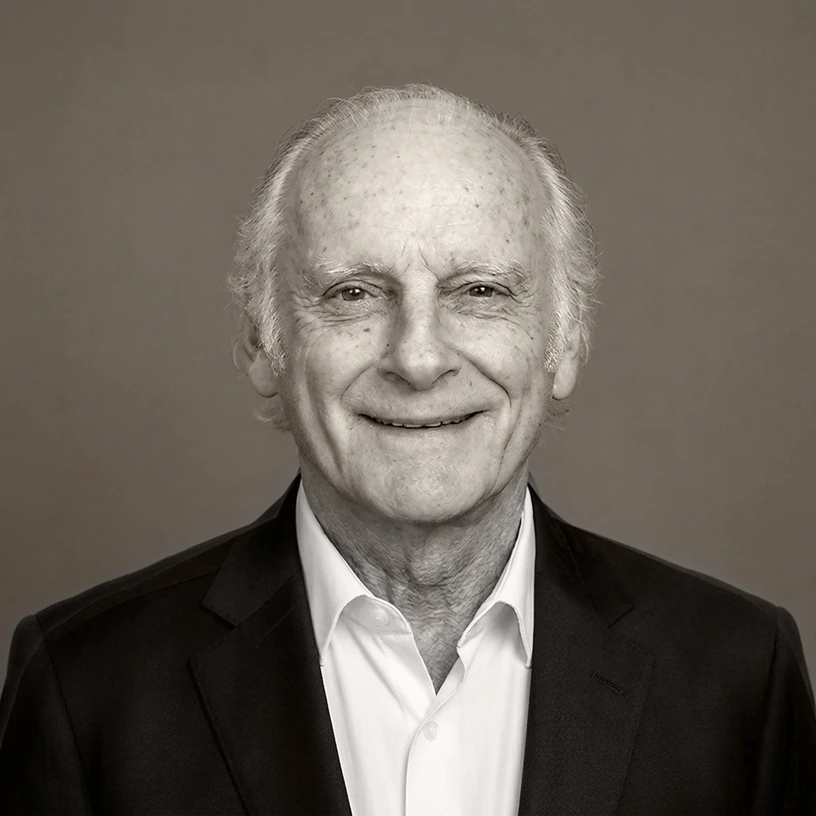
Dr Terence Sheppard
Partner, Leadership & Performance
Terence is an organisational psychologist and an economist, and holds a PhD in education. He has spent more than thirty years helping leaders create high-performance cultures at some of the biggest companies in the world: Coca-Cola, Sony, BHP and HSBC among them. He founded his own leadership development practice in 1983, employed hundreds of practitioners, ran programs across five continents, and still teaches in executive education and Master of Psychology programs today. He makes sure process optimisation holds for the long term, through the organisational design and leadership behaviours that carry it.

James Lovell
Partner, People & Culture
James makes high-performance culture measurable and sustainable. He founded Culture Amp's London office, and has worked with leaders at top-performing companies across sectors: from Google DeepMind to the World Economic Forum, Lloyd's of London to the McLaren F1 team, and Soho House to Cambridge University. He holds a Masters in Clinical Psychology and studied innovation at London Business School. As a leadership coach, he works directly with the executives who lead the change, not just the teams living through it. He turns people and culture data into the insights and behavioural changes that ensure a business is reaching its full potential now and in the future.
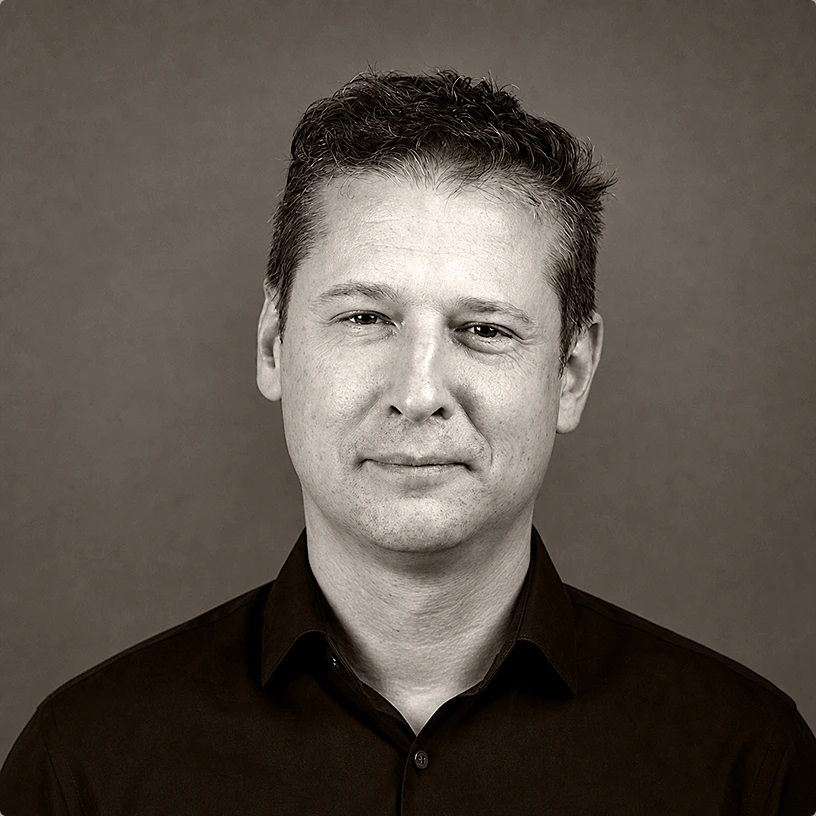
Partner, Engineering
Kiril is the engineering muscle. He has been building production software for over twenty years, from an early engineering role at ING to years as a senior software architect in Amsterdam, and has shipped full-stack blockchain and DeFi platforms since deploying his first smart contract in 2016. He holds a degree in artificial intelligence and was working with it long before the current wave. Today he architects regulated platforms end to end: the platform, the app, and the AI systems built on top. When an engagement needs secure, production-grade build rather than slideware, Kiril is who builds it.

AI Implementation & Automation Lead
Kieran carries the build. He spent the last year and a half leading AI adoption inside a top-50 AFR-ranked accounting firm of around a hundred people, taking it from scattered experimentation to firm-wide, measured adoption across accounting, audit and advisory: 98% of staff adopted the tools he built and trained them on, with more than 6,000 hours of tracked time saved. An accountant by training who codes, he knows exactly where the mechanical work hides, how to automate it safely, and how to get a sceptical team to actually use what he builds. Few people anywhere have taken an entire professional-services firm through AI adoption end to end rather than a pilot; Kieran has, and clients get that playbook from day one.

Eva Liu
Business Development
Eva is the firm's relationship engine, equally at home in Chinese and Western business. Beijing-born, she has spent her career where cross-border deals are won or lost: running China market entry and negotiations for a leading French aerospace company, then working with KPMG in the US supporting multi-million-dollar transactions and the negotiations around them. Eva now leads business development, bringing that same instinct for reading a room and holding a relationship to client conversations, onboarding and partnerships.
09
Under the bonnet
Our own AI systems build a live model of how your business operates, and pressure-test the decisions that matter across rival AI models, so you get an answer you can defend. You don't need to care how it works, only that it does. But if you want the deep version, it's here.
See the technology
10
For private equity
Assess operations, culture, technology and risk as rigorously as the finances, then turn the same review into a post-acquisition value-creation plan across the portfolio.
How we work with PE