
95%
of enterprise generative AI pilots delivered no measurable return (MIT NANDA, 2025). The models were rarely the reason. The failure sat in how the work runs and whether people take it up.
01
People & Culture
You can redesign every process and install the best tools available. If the people resist it, fear it, or were never brought along, the program returns nothing. We treat organisational design and behavioural change as part of the build, not something added at the end.
of enterprise generative AI pilots delivered no measurable return (MIT NANDA, 2025). The models were rarely the reason. The failure sat in how the work runs and whether people take it up.
02
Why it is the real risk
Resistance is rational
When you change how people work, some of them are right to be concerned. Managed badly, that concern quietly ends the rollout before anyone admits it has.
Knowledge lives in people
The work that actually runs the business usually sits in people’s heads. Move it into a system without moving the people, and you can lose both.
Adoption is the whole result
A tool nobody opens returns nothing. Culture is what decides whether and how well it gets used, and culture can be measured before you spend the money.
Where the effort goes in AI that works · BCG
Models
Technology and data
People and process: roles, workflows, training, managers
03
The capability
Most technology consultancies sub-contract out the human side, or skip it entirely. We do neither. Echelon One holds a thirty-year organisational psychology practice in house: senior practitioners who can measure and influence what drives and threatens performance inside your business, working on the same engagement as the people doing the technical build.
The usual way · three firms, two handovers
Echelon One · one team, start to finish
One firm, accountable from the first assessment, through the changes in behaviour, until the projected outcomes become measurable business results.
04
The method
01
Psychology and data
02
Assessment into development
03
Thirty years of cycles
05
What we do
People & Culture Assessment
Fast, rigorous measurement of the cultural factors that can threaten or drive business performance. The baseline everything else is built on and measured against.
Leadership Development
Programs designed around the factors the assessment surfaced, and aligned to the company's actual goals rather than a standard syllabus.
Culture Change
Using people and culture data to drive the leadership behaviours that foster and maintain a high-performance culture in your unique context, so it all holds once we leave.
Change management and adoption
The design work that decides whether a new way of working is taken up or quietly abandoned. Audience by audience, with the resistance named and worked through rather than hoped away.
Strategy facilitation
Getting your leadership team to a decision they will still stand behind in six months, which is a different skillset from having the right answer.
Business process engineering
Redesigning how the work actually moves before any technology touches it. Much of the return sits here, and it is a people question first.
06
Our people
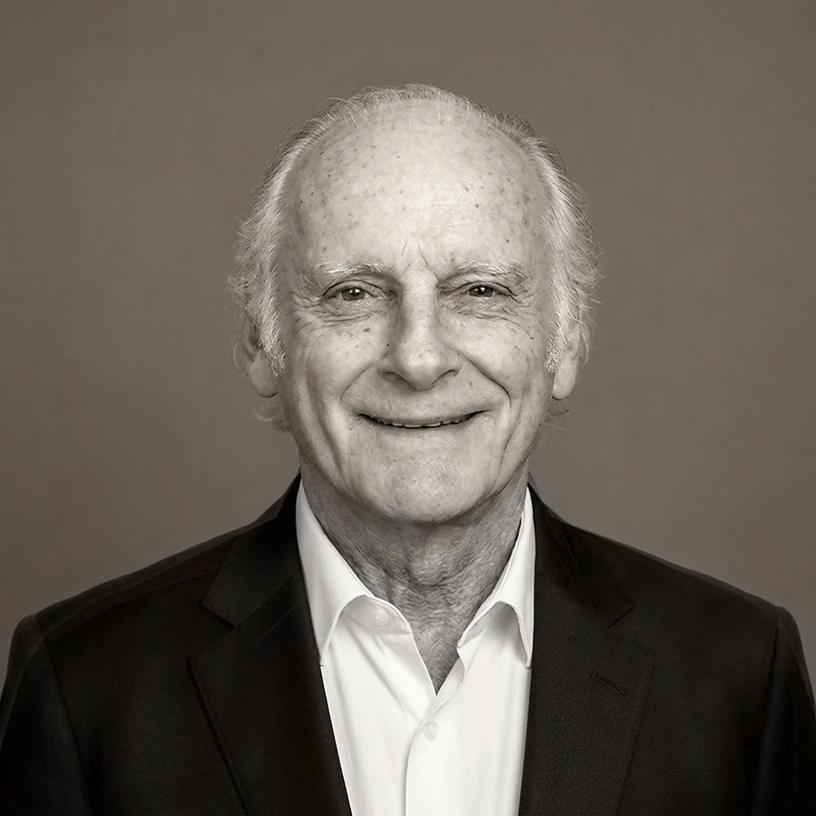
Dr Terence Sheppard
Partner, Leadership & Performance
Terence is an organisational psychologist and an economist, and holds a PhD in education. He has spent more than thirty years helping leaders create high-performance cultures at some of the biggest companies in the world: Coca-Cola, Sony, BHP and HSBC among them. He founded his own leadership development practice in 1983, employed hundreds of practitioners, ran programs across five continents, and still teaches in executive education and Master of Psychology programs today. He makes sure process optimisation holds for the long term, through the organisational design and leadership behaviours that carry it.

James Lovell
Partner, People & Culture
James makes high-performance culture measurable and sustainable. He founded Culture Amp's London office, and has worked with leaders at top-performing companies across sectors: from Google DeepMind to the World Economic Forum, Lloyd's of London to the McLaren F1 team, and Soho House to Cambridge University. He holds a Masters in Clinical Psychology and studied innovation at London Business School. As a leadership coach, he works directly with the executives who lead the change, not just the teams living through it. He turns people and culture data into the insights and behavioural changes that ensure a business is reaching its full potential now and in the future.
Terry and James are partners at Echelon One, alongside the wider team. Meet everyone
07
The record
The companies below sit within the collective experience behind Echelon One, built across the careers of the people who work here.




























Sectors
08
The evidence
These case studies represent a fraction of the successful engagements from Terence and James's own practice. The people and culture work inside an Echelon One engagement is run by two partners with a multi-decade record of helping leaders drive commercial outcomes.
Agriculture · 300+ employees
+22%
revenue in year one, profitability up 8%
Private equity · 500+ employees
150%
growth in TCC, 2018 to 2025
Transport · 200+ employees
+33%
profitability in year one, revenue held stable
“They have coached, they have connected with our people, and they have helped us lift our performance to the next level.”
“Their initiatives have added significant value, reducing operating cost, increasing productivity, improving competitive advantage or reducing risk. Their customer-intimate approach is second to none.”
09
Inside an engagement
01
A magnet, not a mandate
02
Nobody loses their job
03
A human gate on anything customer-facing
04
We measure what the time buys
The readiness baseline runs alongside the technical work from week one. The sessions run during the pilot. We measure the shift at the pilot's end, over the same window. The people work is what makes the pilot land. It does not slow it down.
The psychologist who ran the assessment is in the room when the process gets redesigned, and still there when the technology goes in. Nothing is handed between firms, so nothing is lost in the handover. People and culture runs inside every Echelon One engagement, from the first week of Map through to Refine.